RISULTATI RICERCA
La ricerca ha estratto dal catalogo 105574 titoli
The purpose of this study is to give an overview of the extent, range, and nature of existing studies on active ageing in marginal areas. This overview will enable researchers, policymakers, and communities to understand the key challenges and opportunities related to improving older adults’ quality of life in marginal areas. This takes the form of a scoping review in which Arksey’s and O’Malley’s methodology is adopted. A total of 41 contributions were considered relevant for our purposes. The studies selected show that the key issues concerning active ageing in marginal areas are the following: i) quality of life, ii) care needs, and iii) social inclusion.
This article is a contribution to the studies of the sudden and precipitous collapse of European communism. It seeks to revisit the main stages of interactions between the PCI leaders and Gorbachev’s reformist circle. The author sought to shed some light on the generational, social, and cultural aspects of the story. In particular, to the role of informal transnational community between Italian and Soviet (mostly Russian) communist believers, that was formed in the 1930s-50s – the community which, thanks to such representatives as Anatoly Chernyaev, became crucial part to a background of institutional relationship between the two parties. Also, the author used the diaries of Chernyaev and Anatoly Adamishin, selective and special as they were, to complicate the chronology of the crisis of European communism: these personal documents demonstrate that some changes of minds and perspectives took place much earlier and in parallel on both sides, as Italians and Soviets pursued their parallel paths towards their exits from the great collectivist utopia.
Starting from a confidential conversation that the Ponti? had in January 1985 with the leaders of the Italian Church, the essay examines the geopolitical and ecclesiological vision of John Paul II. In this document emerge some judgments of the Pope on Italian and international communism, on capitalism and on the mission of the Church in Italy and in the world. This meeting took place in the most delicate phase of the Second Cold War and was connected both with the di?cult situation in Poland (and Solidarnosc) and with the attempt to relaunch the DC in Italy. In this sense was very important the dual role played at that time, by Andreotti as Foreign Minister of the Craxi Government and as historical leader of the Italian Catholic party.
The article recalls the studies that Piero Craveri, one of the leading contemporary political historians, has dedicated to the Communist Party from its origins to the Berlinguer era. The aim is to highlight, through the writings of a non-communist historian, who has perhaps most comprehensively addressed the subject, the controversial historiographical turning points, both concerning the history of the party itself and its interaction with the more general history of the country.
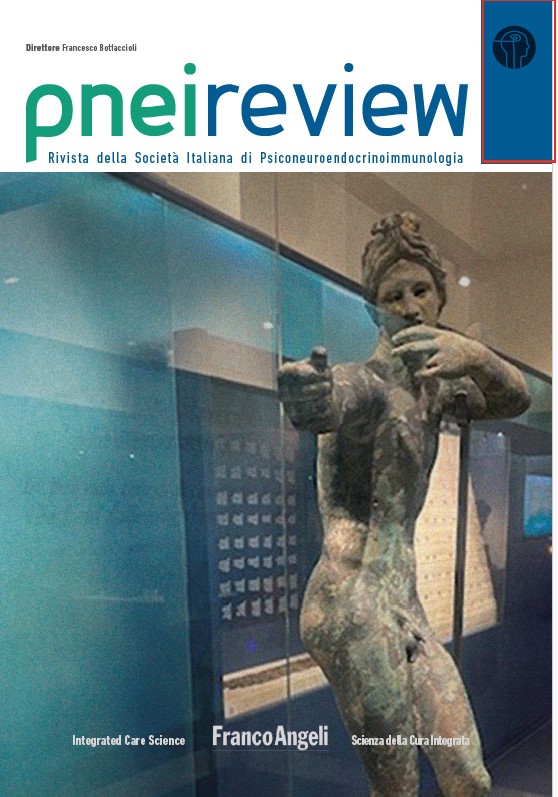
The growing body of evidence on the role of the gut microbiota (GM) in regulating the bidirectional gut-brain axis suggests the existence of a complex network that also involves the immune system (IS). The interaction between GM and IS is crucial for the development and modulation of immune responses, through microbial metabolites such as short-chain fatty acids (SCFAs), which influence both mucosal immunity and neuroinflammation. SCFAs regulate immune homeostasis and the function of the blood-brain barrier (BBB), affecting microglia, astrocytes, and neurons. These mechanisms are particularly relevant in neurological disorders such as Parkinson’s disease, where dysbiosis and SCFA alterations contribute to neurodegeneration. Although most results derive from preclinical studies and should be interpreted with caution, the use of probiotics, prebiotics, and postbiotics represents a promising therapeutic approach. The “microbiota-immune-brain” model opens new insights for the prevention and treatment of neurological and psychiatric disorders, although larger and more specific clinical trials are needed to confirm its applicability in humans.
Il lavoro si basa sul presupposto che la costruzione dell’identità risieda nell’interazione tra identificazioni proiettive e introiettive. Tuttavia, le difficoltà nell’interazione con l’oggetto, volte a evitare la realtà dolorosa insopportabile, danno origine a distorsioni nella percezione dell’oggetto e, di conseguenza, a identificazioni inappropriate. In questa prospettiva, il compito dell’analista è quello di evidenziare tali identificazioni errate nella relazione analitica, consentendo al paziente di ricostruire la propria identità in modo più coerente con la propria realtà psichica. Viene studiato un caso di disturbo alimentare, rivisitando il concetto di corpo primitivo come gestore delle emozioni, come ho già delineato in un altro lavoro. Ora, viene esplorato il coinvolgimento di questo corpo primitivo nella costruzione e nell’organizzazione dell’identità.
Il lavoro di Laurence Kahn dimostra che la libertà implica una tensione tra elementi opposti; e che sostenere la libertà, accettando tale tensione, richiede impegno. Due termini tedeschi per libertà – Freimachen e Befreien – hanno significati diversi. Freimachen (usato in particolare da Joseph Goebbels) significa liberare qualcuno (o qualcosa) per scopi strumentali, mentre Befreien denota un senso di liberazione interiore che regimi totalitari come il nazismo non possono tollerare. Il godimento della libertà dipende dall’accettazione della sua restrizione in determinate circostanze. All’epoca in cui Freud scrisse Mosè e il monoteismo, i nazisti rifiutavano qualsiasi restrizione della loro libertà e, di conseguenza, il progresso stava sprofondando nella barbarie. Laurence Kahn illustra queste problematiche nella situazione clinica. Descrive pazienti che erano autoimprigionati psicologicamente o rifiutavano qualsiasi inibizione dei propri impulsi. Il lavoro analitico li ha aiutati ad abbandonare posizioni così estreme e a trovare un tipo di libertà più sfumato, che potesse essere più creativo. La distruzione della Frauenkirche durante il bombardamento di Dresda e la sua successiva ricostruzione, nonché il Congresso IPA del 1985 ad Amburgo – il primo Congresso IPA tenutosi in Germania dopo la Seconda Guerra Mondiale – sono esempi storici straordinari dell’impegno profuso per sostenere la vera libertà.