Misconceptions of neutrality, “scotomist morals” and “not wanting to know”
Journal title PSICOANALISI
Author/s Claudia Frank
Publishing Year 2026 Issue 2026/1
Language Italian Pages 7 P. 77-83 File size 85 KB
DOI 10.3280/QUA2023-117008
DOI is like a bar code for intellectual property: to have more infomation
click here
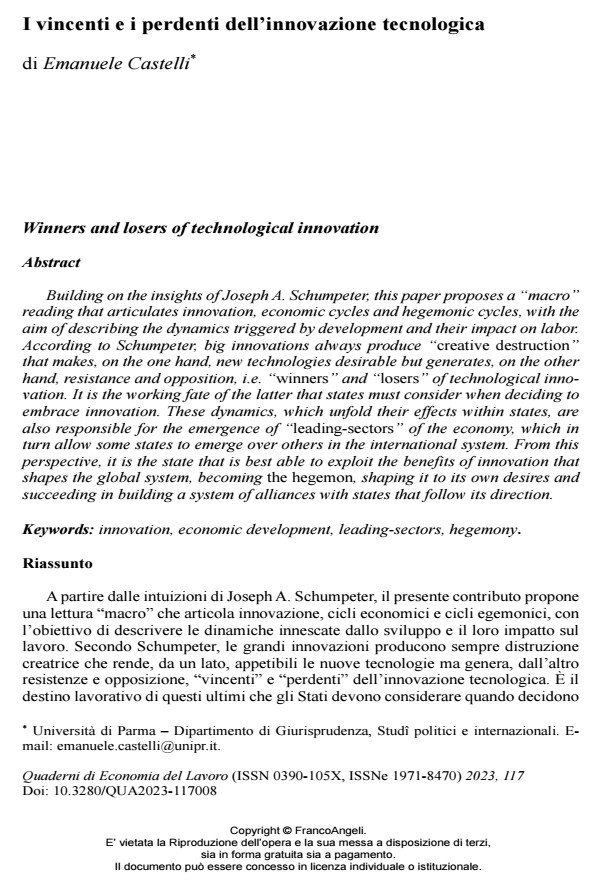
Below, you can see the article first page
If you want to buy this article in PDF format, you can do it, following the instructions to buy download credits
FrancoAngeli is member of Publishers International Linking Association, Inc (PILA), a not-for-profit association which run the CrossRef service enabling links to and from online scholarly content.
In her discussion of D. Morgan’s paper Neutrality? Bystanders and the Refusal to Witness C. Frank proposes to take into account M. Klein’s basic insights in our own destructiveness and R. Money-Kyrle’s theory of conceptions and misconception, which she applies on neutrality. She suggests an understanding of neutrality encompassing concern and its misconceptions then being characterised by evasiveness. Frank sees an involuntary refusal to witness in omitting October 7th when speaking of Gaza and describes October 8th as a striking example for the mechanisms in bystanding,
Keywords: benevolent neutrality, misconception, scotomist morality, pathological superego organsiations.
- Erlich S. (2025). La psicoanalisi è rilevante per il conflitto israelo-palestinese? International Journal of Psychoanalysis, 106, 1: 165–173. DOI: 10.1080/00207578.2025.245329
- Frank C. (2003). Zu Melanie Kleins zeitgenössischer Bezugnahme auf Hitler und den Zweiten Weltkrieg in ihren Behandlungen. Psyche – Zeitschrift für Psychoanalyse, 57: 708–728. (Eng. Version) (2020), Melanie Klein’s contemporaneous references to Hitler and the Second World War in her therapeutic sessions. In: Essential Readings from the Melanie Klein Archives: Original Papers and Critical Reflections, London: Routledge, pp. 85–104.
- Frank C. (2018). Zur Polarität eines einfachen Täter-Opferschemas als Sackgasse – Zum Erfassen der unbewussten Phantasie von traumatisierenden Prozessen als Chance. In: E. Horn & H. Weiß (eds.), Trauma und unbewusste Phantasie, Frankfurt am Main: Brandes & Apsel, pp. 13–34.
- Frank C. (in Corso di stampa). Riflessioni sullo stupro in guerra: una prospettiva kleiniana. In: E. Quagliata & L. Baraitser (Eds.), Violence and the feminine: Psychoanalytic perspectives. London: Routledge.
- Klein M. (1935). Un contributo alla psicogenesi degli stati maniaco-depressivi. International Journal of Psychoanalysis, 16: 145-174.
- Money-Kyrle R. (1944). Alcuni aspetti dell’etica politica dal punto di vista psicoanalitico. Rivista internazionale di psicoanalisi, 25: 166-17.
- Money-Kyrle R. (1956). Controtransfert normale e alcune sue deviazioni. International Journal of Psychoanalysis 37: 360-366.
- Money-Kyrle R. (1968). Sviluppo cognitivo. Rivista internazionale di psicoanalisi 49: 691-698.
- Money-Kyrle R. (1978): Verso un obiettivo comune: un contributo psicoanalitico all’etica. In: The Collected Papers of Roger Money-Kyrle, vol. 48, Strath Tay: Clunie Press, 1944, pp. 176-197.
Claudia Frank, Equivoci sulla neutralità: la “morale scotomizzante” e il “non volere sapere”. L’esempio dell’8 ottobre – discussione del saggio di David Morgan “Neutralità? Gli spettatori e il rifiuto di testimoniare” in "PSICOANALISI" 1/2026, pp 77-83, DOI: 10.3280/QUA2023-117008