Design International - Open Access

Direction:
Silvia Piardi

Scientific Board:
Alessandro Biamonti, Alba Cappellieri, Mauro Ceconello, Claudio Germak, Elisa Giaccardi, Ezio Manzini, Carlo Martino, Promil Pande, Mario Piazza, Angelica Ponzio, Francesco Scullica, Francesca Tosi, Yingchun Zang

Editorial Board:
Alessia Brischetto, Alessio Caccamo, Barbara Camocini, Giuseppe Carmosino, Eugenia Chiara, Mariana Ciancia, Chiara Di Lodovico, Andrea Di Salvo, Elena Elgani, Silvia Gramegna, Marco Quaggiotto, Gustavo Alfonso Rincon, Fabiano Scherer, Daniela Selloni, Davide Spallazzo, Livia Tenuta

The Design International series was launched in 2017 as a place for cultural exchange between the different design souls. Over the years, the series has consolidated its position as a point of reference for international research, outlining a continuously updated research map. The Scientific Committee, consisting of experts in fashion, interiors, graphics, communication, product, service, social interaction, innovation and emotional design guarantees the level of the accepted texts. The Editorial Board, consisting of young experts in the different branches of design, supports the work of the scientific committee. After an initial evaluation by the two committees, the texts undergo international double revision.

(leggi tutto)

Collana Peer Reviewed

La ricerca ha estratto dal catalogo 60 titoli

Marita Canina, Tatiana Efremenko

Educating Future-ready Designers

A framework for teaching design futures

Tomorrow’s designers must do more than create products, services, and experiences. They must anticipate change, navigate uncertainty, imagine alternative futures, and make responsible decisions in a world transformed by artificial intelligence, climate change, and accelerating technological and social transitions. This book introduces Design Futures, an original educational approach that brings together Design Thinking, Futures Thinking, creativity, immersive storytelling, experiential learning, and AI as a creative collaborator.

cod. 10319.49
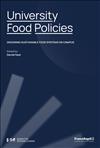
Davide Fassi

University Food Policies

Designing Sustainable Food Systems on Campus

Universities are increasingly recognised as key actors in the transition towards more sustainable, inclusive, and resilient food systems. The volume introduces a set of guidelines for university food policies and investigates their application through prototyping activities carried out in different Italian institutional contexts.

cod. 10319.48

Anna Mazzanti

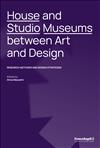
House and Studio Museums between Art and Design

Research Methods and Design Strategies

House and studio museums of artists, architects, and designers – the spaces of the faber – constitute the core subject of this volume, which examines how these dwellings and workspaces, already configured as museums or envisaged as such after the disappearance of their owners, may be systematically studied, classified, and enhanced through the disciplinary lenses of art history, museology, and design.

cod. 10319.46

This volume explores the evolving landscape of customization in design, analyzing the technological and cultural shifts redefining how products are conceived and manufactured. Growing out of extensive academic research, the volume investigates how Additive Manufacturing, Computational Design, and Generative AI are enabling a transition from rigid mass production to a flexible model capable of responding to the demand for uniqueness.

cod. 10319.47

Ico Migliore

Time to exhibit

Directing Spatial Design and New Narrative Pathways

This book offers a key for reinterpreting interior design as a whole, in light of the narrative component of a kind of exhibition design that constantly addresses the measurement of time, which becomes the founding variable to be dealt with on the level of a project. Commenting on the evolution of exhibition design, the volume outlines its future sceneries, arising as an unicum from the perspective of the reflection on the role and the developments of this interior design branch.

cod. 319.8

Maria Eugenia Sosa Martì, Caterina Dastoli

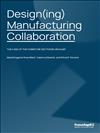
Design(ing) Manufacturing Collaboration

The Case of the Furniture Sector in Uruguay

In Uruguay, collaboration between designers and manufacturing companies remains limited, largely due to the historical separation between the academic sphere and the productive sector. Design has often evolved within theoretical or cultural frameworks disconnected from industrial practice. This book seeks to bridge that gap, presenting a design intervention aimed at creating spaces for exchange and collaboration between those who design and those who produce.

cod. 10319.44

Antonella Penati, Agnese Rebaglio

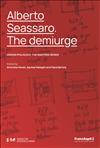
Alberto Seassaro. Il demiurgo

Design philology. The masters series

This volume is part of an editorial project aimed at enhancing the history of design at Politecnico di Milano and, in particular, inaugurates the series The Masters, dedicated to the figures whose thought has fueled the cultural pluralism that is the hallmark of the entire institutional project. The remembrance of the Masters begins with Alberto Seassaro, the demiurge, a Dean capable of giving Design a home by conceiving and building the first Italian Faculty at Politecnico di Milano.

cod. 10319.43

Virginia Tassinari, Francesca Piredda

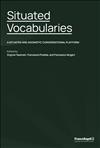
Situated Vocabularies

A situated and agonistic conversational platform

The book explores the Situated Vocabulary, a participatory design research project aimed at co-designing vocabularies of shared meanings to feed conversations between situated communities and prompt transformative actions for their future.

cod. 10319.42

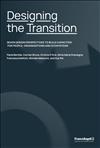
Paola Bertola, Carmen Bruno

Designing the Transition

Seven design perspectives to build capacities for people, organisations and ecosystems

This book explores how design can build capacities for individuals, organizations, and ecosystems, enabling them to navigate the complexities of sustainability transitions. The book introduces the ECODeCK project, a design-driven capacitybuilding model developed to support sustainable transitions in the manufacturing sector.

cod. 10319.41

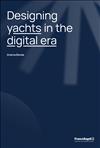
This volume examines the transformation of yacht design within the context of the digital and industrial transitions characterising contemporary design practice. Drawing on over ten years of research, the volume investigates how computational technologies, advanced manufacturing, and data-driven systems are redefining processes, roles, and disciplinary boundaries in the yachting industry.

cod. 10319.40