The digital divide as a determinant of inequality in later life: a systematic review
Journal title SALUTE E SOCIETÀ
Author/s Sara Petroccia, Maurizio Esposito
Publishing Year 2026 Issue 2026/1
Language English Pages 14 P. 129-142 File size 320 KB
DOI 10.3280/SES2026-001009
DOI is like a bar code for intellectual property: to have more infomation
click here
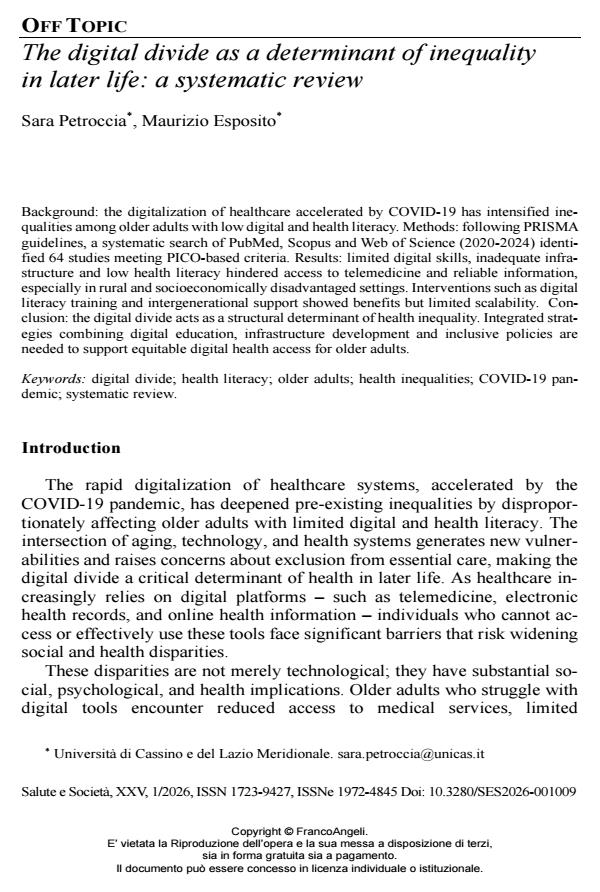
Below, you can see the article first page
If you want to buy this article in PDF format, you can do it, following the instructions to buy download credits
FrancoAngeli is member of Publishers International Linking Association, Inc (PILA), a not-for-profit association which run the CrossRef service enabling links to and from online scholarly content.
Background: the digitalization of healthcare accelerated by COVID-19 has intensified inequalities among older adults with low digital and health literacy. Methods: following PRISMA guidelines, a systematic search of PubMed, Scopus and Web of Science (2020-2024) identified 64 studies meeting PICO-based criteria. Results: limited digital skills, inadequate infrastructure and low health literacy hindered access to telemedicine and reliable information, especially in rural and socioeconomically disadvantaged settings. Interventions such as digital literacy training and intergenerational support showed benefits but limited scalability. Conclusion: the digital divide acts as a structural determinant of health inequality. Integrated strategies combining digital education, infrastructure development and inclusive policies are needed to support equitable digital health access for older adults.
Keywords: digital divide; health literacy; older adults; health inequalities; COVID-19 pandemic; systematic review.
Sara Petroccia, Maurizio Esposito, The digital divide as a determinant of inequality in later life: a systematic review in "SALUTE E SOCIETÀ" 1/2026, pp 129-142, DOI: 10.3280/SES2026-001009