RISULTATI RICERCA
La ricerca ha estratto dal catalogo 104906 titoli
What is the Social Cohesion? Some Remarks on the Semantics of a Sociological Basic Concept - In his paper, the author tries to analyse some innovative theories of social cohesion, pinpointing their respective and different semantics. This theories can be analysed as representative of sociological realism, holism and elisionism. From the realist point of view social cohesion can be conceptualized as one of the two layers of the social integration (as opposed to the system integration). In this sense the sociological theory has to improve its capacity to link the macro-, meso- and micro-sociological levels of analysis connecting it with the temporal morphogenesis of societies. From the holistic point of view, the social cohesion is the epiphenomenon of the society’s network structure. For the elisionist, social cohesion is reproduced by the situated interactions which suspend the cultural elements as well as the structural one. The author suggests that sociology should overcome the old lib-lab conceptualization of social cohesion conceived as the product of the good integration between the market and the state. Social cohesion should be redefined in a new relational way. Keywords: social cohesion; relational society; realism; holism; social integration.
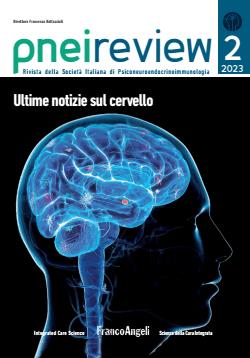
In The four realms of existence. A new theory of being human, tradotto da Cortina con il titolo I quattro mondi dell’uomo. Una nuova teoria dell’io, il celebre scienziato newyorkese affronta “il problema difficile” della coscienza. Lo fa partendo da un concetto, che esprime già nella Prefazione: «la comprensione cosciente che avete della vostra mente è una interpretazione, o una narrazione, che sgorga spontaneamente da processi non coscienti», che non sono l’inconscio freudiano, come vuole puntualizzare. Tuttavia, il libro, di circa 400 pagine, racconta una storia ben più ampia, «dove la nostra struttura biologica è il fondamento della struttura neuronale, la quale è alla base della struttura cognitiva e rende possibile la nostra struttura cosciente». Non si tratta però di una visione riduzionista, bensì della «descrizione della interazione tra i modi di essere biologico, neurobiologico, cognitivo e cosciente». Riportiamo qui, con l’autorizzazione dell’Editore, l’intero cap. 15 del volume. Infine, per i seguaci della teoria polivagale e del cervello trino di McLean, ne segnaliamo la critica radicale alle pagine 119123 sotto il titolo “Sciocchezze sul prosencefalo: un racconto magico sull’evoluzione del cervello”.

L’articolo indaga le pratiche di riuso temporaneo in spazi e terreni vuoti che non trovano ancora un nuovo utilizzo, e che possono trovare usi temporanei in quel ‘tempo di mezzo’ di anni, e spesso decenni, che intercorre tra vecchia e nuova destinazione d’uso. Come avviare una ricerca-azione sul riuso temporaneo prendendo in analisi alcuni casi studio stranieri e mettendoli a confronto con la propria realtà urbana? Nell’articolo viene data una prima griglia di lettura ed individuati cinque elementi comuni d’indagine, quali: la tassonomia di spazi urbani dismessi o sottoutilizzati, gli attori che fruiscono, avviano o si relazionano a progetti di riuso temporaneo, i diversi cicli temporali abitativi, lavorativi o ludici che in questi spazi si possono attivare, i tre macro-livelli di nuova infrastrutturazione e interventi architettonici commisurati al tipo e alla durata del riuso temporaneo degli spazi, ed infi ne le regole, le procedure e le garanzie giuridiche che hanno permesso l’avvio di progetti sperimentali di riuso temporaneo.
The purpose of issue is to find an operational concept of "good food" on the basis of appraisal of 400 family food purchasing responsibles. For this purpose: Six opposite couples defining good food concept are selected. This couples are detailed in 54 items on which the appraisal has been requested to the purchasing responsibles. The items have been elaborated whit principal components methodology, for male and female segment of group, obtaining different concepts of "good food". Differences on the concept of good food are individuated also regarding age and level of instruction. 8 clusters are obtained on basis of use of media and the differences between them regarding the idea of good food are individuated. The main result is to confirm the existence of different evaluation of good food concept in different segments of interviewed group.

Nel presente articolo viene esposta l’esperienza del passaggio da una terapia di gruppo in presenza a una telematica, svolta attraverso l’utilizzo di una chat. Questo cambiamento è stato attuato a fronte della situazione di pandemia globale causata dalla diffusione del SARS-CoV-2. Lo stato di emergenza ha imposto ai professionisti della salute mentale di ripensare il proprio lavoro per garantire una continuità del percorso psicoterapeutico. Il passaggio alla modalità telematica ha comportato la necessità di interrogarsi in merito a quali fossero le azioni da intraprendere per ri-strutturare il gruppo. A tal fine, si è rivelato utile definire nuove regole del setting e apportare dei cambiamenti alla modalità di conduzione. Le riflessioni qui presentate non pretendono di esaurire l’argomento, quanto piuttosto intendono
Chassidismo e eticità
Tra educazione e nuova paideia
Il volume presenta, in una prospettiva democratica e problematicamente aperta, alcune tematiche del pensiero chassidico per proporre al dibattito pedagogico contemporaneo nella scuola, nell’università e in tutte le agenzie educative alcuni spunti per ripensare criticamente il fare educazione in termini teoretici e in relazione alla prassi storica: l’educare è declinato secondo il pensiero chassidico, interpretato come pratica possibile per l’elaborazione di una nuova paideia e paradigma etico per un confronto con la storia.
cod. 249.2.17

In a world marked by acceleration and dispersion, the aesthetic experience of wonder risks being lost. This article explores how gestalt therapy – particularly as developed within the New York Institute for Gestalt Therapy (NYIGT) – offers a clinical and philosophical response to this fragmentation. Drawing on field theory, the temporal sequence of contacting, and the aesthetic of perception, I propose that wonder arises when we linger with experience, allowing novelty to emerge from the ordinary. Through metaphor, clinical reflection, and phenomenological inquiry, I argue that contacting is not merely a therapeutic technique but a rhythmic, aesthetic process that reenchants our engagement with the world. Wonder, like a rainbow, beckons us forward – not as a goal to be grasped, but as a promise sensed in the momenta of contacting.
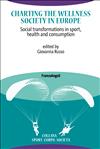
Charting the Wellness Society in Europe.
Social transformations in sport, health and consumption
Today sport and physical activity are considered cultural tools able to understand the evolution of contemporary symbolic practices, always looking for wellness. The book examines in specific the wellness dimension, going beyond the concept of active lifestyle, investigating the importance of physical activities in order to maintain good health, with a comparative look between Italy, France and the United Kingdom.
cod. 1569.15
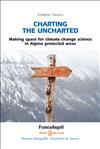
Charting the uncharted
Making space for climate change science in Alpine protected areas
Protected areas are among the most common and successful instruments for conserving the environmental features of different regions. However, climate change is leading the scientific community to a turning point in designing conservation plans and practices: protected areas cannot held climate change on the edge of their borders, but need adaptation pathways to the new climatic conditions. Building on the literature inherited by the field of the geography of science, the research experiments an array of computational and qualitative methodologies to reconstruct the landscape of science making in protected areas. The final goal is to shed light on the geography of scientific information that shapes the Alps, one of the most crucial conservation regions in Europe, in the face of the looming changes that global warming entails.
cod. 11111.4
In this article, the Author aims to critically piece together some Peircean responses to Cartesian scepticism, evaluating both their robustness and whether they might be of any use against contemporary formulations of the sceptical challenge. First, the Author analyses the 1860s Peircean answer to what can be considered the first kind of Cartesian scepticism - which arises, according to Peirce, from Descartes’ theory of intuition and regards the unknowability of reality - and holds that such an answer is not satisfactory since scepticism, after being put out through the door, comes back in through the window. Second, the Author examines Peirce’s arguments on doubt and belief and claims that they represent a powerful questioning of what can be considered the second kind of Cartesian scepticism, which arises from Descartes’ method of doubt and entails that we should always be sceptical about the truth of our beliefs. Finally, the Author shifts attention from the doubt-based scepticism that Peirce was criticising to contemporary sceptical positions employing a closure principle and argues that Peircean statements on doubt and belief can be employed to build an effective counter-argument to such sceptical claims.