Design International - Open Access

DESIGN INTERNATIONAL SERIES

Direction: Silvia Piardi

Scientific Board:
Alessandro Biamonti, Alba Cappellieri, Mauro Ceconello,
Claudio Germak, Ezio Manzini, Carlo Martino, Francesca Tosi,
Mario Piazza, Promil Pande, Angelica Ponzio, Yingchun Zang

Editorial Board:
Alessia Brischetto, Alessio Caccamo, Barbara Camocini,
Giuseppe Carmosino, Eugenia Chiara, Andrea Di Salvo,
Silvia Gramegna, Shashwat M. Pande, Gustavo Alfonso Rincon,
Fabiano Scherer, Daniela Selloni, Davide Spallazzo, Livia Tenuta

The Design International series was launched in 2017 as a place for cultural exchange between the different design souls. Over the years, the series has consolidated its position as a point of reference for international research, outlining a continuously updated research map.
The Scientific Committee, consisting of experts in fashion, interiors, graphics, communication, product, service, social interaction, innovation and emotional design guarantees the level of the accepted texts. The Editorial Board, consisting of young experts in the different branches of design, supports the work of the scientific committee. After an initial evaluation by the two committees, the texts undergo international double revision.
(leggi tutto)

Collana Peer Reviewed

La ricerca ha estratto dal catalogo 56 titoli

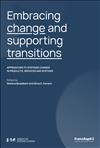
Stefana Broadbent, Silvia Ferraris

Embracing change and supporting transitions

Approaches to systemic change in products, services and systems

The volume presents a series of studies and reflections on how design is approaching the transition towards more uncertain futures: novel ways of integrating new disciplines such as data analysis, artificial intelligence, neurosciences into practice and theory and explore the extension of design processes to develop new frameworks for tackling major societal and environmental changes.

cod. 10319.27

Davide Spallazzo, Martina Sciannamé

Embedding intelligence

Designerly reflections on AI-infused products

Artificial intelligence is more-or-less covertly entering our lives and houses, embedded into products and services that are acquiring novel roles and agency on users. The design discipline and the Human-Computer Interaction (HCI) field are just beginning to explore the wicked relationship between Design and AI, looking for a definition of its borders, still blurred and ever changing. The book approaches this issue from a human-centered standpoint, proposing designerly reflections on AI-infused products. It addresses one main guiding question: what are the design implications of embedding intelligence into everyday objects?

cod. 10319.17

Maurizio Rossi, Davide Spallazzo

Digitally enhanced design

Breakthrough tools, processes, and expressive potentials

The book explores evolving perspectives on furniture, interior, spatial and architectural design, providing a multifaceted view of how the design discipline and practice deal with the complex and ever-evolving interplay between the physical and the digital realms. It explores the new frontiers of digitally enhanced design, investigating how computation capabilities impact the design discipline and designers’ thinking and practice, proposing captivating portraits of digitally enhanced design possibilities, from tools and processes to expressive potentials.

cod. 10319.9

Luca Guerrini, Paolo Volontè

Dialogues on Design.

Notes on Doctoral Research in Design 2018

This book presents the most updated developments of design research in the form of six dialogues between scholars of the Politecnico di Milano and international scholars. Each dialogue focuses on a specific topic recently addressed on the Politecnico di Milano’s PhD programme: the role of users, social innovation, fashion design, colour design, interaction design and urban design.

cod. 319.5

This volume examines the transformation of yacht design within the context of the digital and industrial transitions characterising contemporary design practice. Drawing on over ten years of research, the volume investigates how computational technologies, advanced manufacturing, and data-driven systems are redefining processes, roles, and disciplinary boundaries in the yachting industry.

cod. 10319.40

Paola Bertola, Carmen Bruno

Designing the Transition

Seven design perspectives to build capacities for people, organisations and ecosystems

This book explores how design can build capacities for individuals, organizations, and ecosystems, enabling them to navigate the complexities of sustainability transitions. The book introduces the ECODeCK project, a design-driven capacitybuilding model developed to support sustainable transitions in the manufacturing sector.

cod. 10319.41

Alice Devecchi

Designing the empathic experience

Suggestions from Art Practices

The issue of empathy as an embodied, dialogic experience that potentially enhances the value of human relationships, constitutes the core of this book, which is mainly addressed to explore whether empathy is designable and how. This book traces a theoretical framework for changing perspective on empathy in design, by integrating a phenomenological account. One that focuses on empathy's specific nature of intersubjective experience that introduces the other into one’s own personal horizon.

cod. 10319.22

Carlo Vezzoli, Giovanni Maria Conti

Designing Sustainable Clothing Systems

The design for environmentally sustainable textile clothes and its Product-Service Systems

The Fashion System is one of the most polluting and most impactful industries on the environment. In the last decade the fashion industry has changed its approach, aware of the fact that the attention to the environment can no longer be considered a trend. This path shows the need to intervene in design terms and that the growth in responsibility and role of design, requiring reference scenarios, knowledge and new tools. The book defines the features and scenarios of sustainable development, as well as the evolution of sustainability in research and practice of fashion design, addressing the strategies for the design and development of environmentally sustainable products.

cod. 10319.13

Martina Motta

Designing Knit Designers

Traditionally associated with craftmanship and manual work, knitwear seems a quite unusual subject of investigation for scientific research. This book places it as an integrative part of the industrial design culture where the dialogue between a productive system of excellence and the design discipline taught in universities becomes a topic of central concern. The present book reports an experimentation conducted in the unique conditions of the Italian industrial design culture, that defined tools and methods to train knit designers not as artists, but with the technical and cultural knowledge and the project-oriented mindset that is typical of industrial design disciplines.

cod. 10319.3

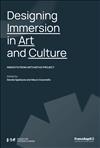
Davide Spallazzo, Mauro Ceconello

Designing Immersion in Art and Culture

Insights from Artcast4D Project

Designing Immersive Technologies in Art and Culture explores how immersive technologies are transforming artistic and cultural experiences, blending the physical and artificial worlds to create engaging environments. The book comprehensively reviews the current literature on immersion. It moves beyond theory to explore public installations, demonstrating how technology is transforming everyday spaces into immersive experiences.

cod. 10319.31