La sfida della comunicazione all'educazione.
Prospettive di media education
cod. 1381.1.10
La ricerca ha estratto dal catalogo 104906 titoli
Prospettive di media education
cod. 1381.1.10
Attori, flussi e reti digitali nelle aree "marginali"
Il volume si sofferma sui processi di riconfigurazione territoriale attivati, o potenzialmente attivabili, nei territori marginali per effetto della digitalizzazione. Partendo da una mappatura dei divari territoriali in Europa e in Italia, la ricerca esplora criticamente la diffusa galassia discorsiva che mobilita le nuove tecnologie e il “ritorno ai borghi”, per immaginare modi di vivere e dell’abitare post-pandemici, sfrondandola di visioni estetizzanti per trasformare alcune sfide ancora aperte in opportunità concrete di sviluppo.
cod. 1387.68
Il 24 giugno 2001 moriva a San Paolo, Brasile, Milton Santos, geografo, studioso rigoroso, attento osservatore del mondo in cui gli era stato dato di vivere, intellettuale applicato in modo continuativo in una riflessione epistemologica relativa alla provincia del sapere in cui operava e al significato del debito o del compito che comportava il collocarsi come intellettuale. Mi permetto di organizzare alcune riflessioni che ne ricordano il contributo. Contributo che, a distanza di due decenni, pone domande che ancora ci accompagnano.

cod. 720.81
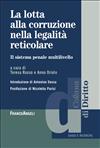
Il sistema penale multilivello
La corruzione minaccia gravemente le istituzioni e i valori democratici, i principi etici e la giustizia, così come lo sviluppo sostenibile e lo stato di diritto. Il volume intende fornire alcune chiavi di lettura critica sulle principali strategie del diritto internazionale, dell’Unione europea e nazionale per prevenire e fronteggiare il fenomeno corruttivo.
cod. 315.2.28
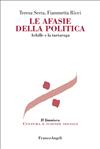
Achille e la tartaruga
Il volume ruota sul tema della comunicazione e dell’ascolto, e sulla crisi della democrazia e di una politica costretta a farsi rincorrere, ma anche a rincorrere senza successo, non solo Achille, simbolo della forza propulsiva del progresso, della tecnica, del mutamento inarrestabile dei processi globali, ma anche la tartaruga, simbolo del tempo lento ma inafferrabile dell’etica.
cod. 629.30
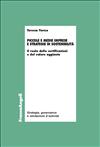
Il ruolo delle certificazioni e del valore aggiunto
Partendo dall’analisi del rapporto tra le PMI e la sostenibilità, il volume evidenzia come tali imprese rappresentino una componente fondamentale dell’economia tanto per la loro capacità di creare valore quanto per il loro impatto sociale e ambientale. Il testo analizza le strategie di sostenibilità e quelle di comunicazione e rendicontazione della sostenibilità, esaminando il ruolo delle certificazioni e del valore aggiunto quale strumento attendibile per la misurazione delle performance di sostenibilità delle aziende.
cod. 1312.14
L’autore presenta il caso clinico di Enza, una paziente con disturbo dissociativo. Nella prima parte, viene dato rilievo alla storia di vita, al profilo interno del disturbo, allo scompenso, ai meccanismi di mantenimento ed alla vulnerabilità della paziente. Nella seconda parte, viene descritto il trattamento psicoterapeutico ad orientamento cognitivo-evoluzionista utilizzato finora, effettuato nelle sue specifiche fasi. Successivamente, vengono presentati i punti problematici e le difficoltà del caso.
Il duogramma nella formazione sistemica. I terapeuti e le loro relazioni di coppia - Purpose of this article is to focus on the relational aspects of the therapist’s loving links: the duogram. The duogram is a new way to describe the affective relationships and it is used in the training sessions for systemic psychotherapists; a neologism was created to point out that, as well as the genogram, it takes care of relationships, but sends to back the idea that only blood ties are important in the therapist’s life. Duogram means the narration and graphical visualization of one person’s loving stories and it recalls the genogram, that actually describes the blood ties. The duogram involves all the affective relationships that were important for the person in his whole life; since he was a child and he can remind them, up to his adolescence and adult life. Wished and dreamed stories are included, even if the feelings were not disclosed or returned. Duogram is therefore the personal representation of our own affective relationships and it refers to the loving links we had with people of our own or the other sex, other than the blood ties that are described by the genogram. During the systemic training sessions, the therapist’s family relationships are widely explored, but his experiences outside the family habitat are not properly taken into account. With this article, the authors wish to move the attention on this point: on the therapist and his role in the loving links he lived in the past and he is living nowadays. This is a way to better manage a couple therapy as well as an individual systemic therapy seen as a relational therapy. This article is focused on the duogram as a training tool and its meaning and usefulness for the new therapists and the whole group of people that is sharing the training session.
Food Official Controls - Food controls are a key issue within the European food safety arena. Since 2002 the legislator is constantly improving the control system in order to better achieve the high safety principles contained in the European regulation n.178 and the network set up in it. Thus, the regulation n. 882/2004 is specifically dedicated to food safety controls: it is the main piece of legislation concerning this aspect as it has been adopted by the co-decisions procedure which involves the European Parliament and the Council. Despite that, it left some "white" spaces to be filled by the implementing measures adopted within the so called comitology procedure in which it is the Commission to act as a co-regulator. The latter is currently implementing art. 15.5. of the regulation n. 882/2004 to set up a system of increased controls for food and feed. Key words: food safety; control system; regulation n. 882/2004.
This paper analyses the interactions between the control of marriage and human mobility in early modern Venice. It examines the role that ordinary people and local communities played in controlling migrants’ mobility and marital unions. In particular, it shows the ways in which the religious authorities attempted to collect information about mobile actors in order to prevent the crime of bigamy. The research focuses particularly on the intermediaries and the networks through which oral testimonies and certificates were conveyed, both locally and trans-locally. To do so, the author uses a specific archival source, the so-called processetti matrimoniali: namely, pre-matrimonial enquiries aimed at attesting the marital status of foreigners, widows and widowers, and other mobile actors (i.e., merchants, sailors, and pilgrims) who wanted to get married in Venice. It is in this regard that the Venetian urban context will be analysed as a case study for discussing the historical perspectives of two recent books: The History and Cultures of Vigilance. Historicizing the Role of Private Attention in Society, edited by A. Brendecke and P. Molino; and Riferire all’autorità. Denuncia e delazione tra Medioevo ed Età moderna, edited by M.G. Muzzarelli. Using the perspective of the "cultures of vigilance", instead of the surveillance approach, will help to counter the idea that the control of marriage was simply a top-down process, or a centralized disciplinary action. It will reveal that local and trans-local communities were important means of control, able to influence the effectiveness of administrative and government practices.
A drama «conceived as a serial novel». Translations of the Risorgimento on the stage of the Great War - The article focuses on Italian theatre and its reception during the First World War, in particular on the dramas and performances based on the Risorgimento’s history. This type of performance cannot be considered as high or low theatre: the plots cannot be bound to one category, audience reactions are the same in Milan as they are in small city theatres and in schools, independently from who is acting. The author sheds light on the popularization process of national history through theatre and at the same time, contextualises these apparently opaque plots, in an attempt to understand what the performances conveyed.