
RISULTATI RICERCA
La ricerca ha estratto dal catalogo 104906 titoli
Changes in the consumption model are inherent in the processes of socio-economic development the indicator of which is the enrichment of the population. Such changes include the emergence of new proportions in the consumption of particular categories of goods and services, and, according to the regularities observed by Engel, lower the share of expenditure on a broadly understood category of food. Increasing incomes are also linked to changes in the internal structure of food consumption. This study is to assess the changes in the level and structure of food expenses resulting from the enrichment of the European Union (EU) societies. The study covered the co-occurrence of differences in food consumption with households’ income differences in the EU countries. The analyses presented in the study relate to the period after the EU enlargement in 2004 and are based on the Eurostat data. The research allows for a positive verification of the thesis that the higher the incomes, the more balanced the structure of food expenses. In more affluent economies, the consumption of a more diversified basket of goods is observed. This finding is supported by the high negative correlation between the structure concentration ratio for food expenditure and the households’ income level. In addition, the identification of country clusters based on consumption expenditure broken down into food categories makes it possible to confirm the thesis that there are income differences between economies with different consumption models. It is confirmed by the variance analysis concerning income level for countries in three groups: the South Europe with the highest food expenses, the Central and Eastern Europe with the most limited spending and the lowest income, and the affluent "old" EU members with high expenses on luxuries consumed for social reasons. However, the analyses presented here do not allow for validation of the thesis that food consumption patterns among the EU countries become similar, but rather point to the predominance of the consumption divergence processes, which occur despite the declining income differences. This claim is based on the observation of increasing average Euclidian distance between food expenses in the EU countries in 2005 and 2015. Nevertheless, some signs of shift towards Mediterranean consumption patterns may be found for many societies.

In the historiography of the seventeenth-century Spanish Empire, Manila figures prominently as both a commercial entrepôt and as a site of ethnic conflict. This article examines the less-studied social processes of migration, settlement, and mestizaje that laid the foundation for Manila’s prosperity as well as its global diversity. It examines Spanish efforts to segregate and manage ethnic diversity in urban and domestic spaces, everyday cosmopolitanism and mestizaje, and the ways in which unresolved tensions between pluralism and exclusivism structured interethnic violence. Early Modern Manila lived according to a volatile and often begrudging convivencia that was grounded in cross-cultural interactions that, no matter how grave the crisis, underwrote the Manila’s prosperity and social composition throughout the seventeenth century.
Biscayne National Park is the largest marine national park in the United States. It contains four distinct ecosystems, encompasses 173,000 acres (only 5% of which are land), and is located within densely populated Miami-Dade County. The bay has a rich history of natural resource exploitation, but aggressive residential and industrial development schemes prompted Congress to create Biscayne National Monument in 1968, followed by the designation of Biscayne National Park in 1980. When the dust settled the state of Florida retained key management powers over the park, including joint authority over fishery management. States and the federal government occasionally share responsibility for regulating natural resources, but Biscayne National Park represents a unique case study in cooperative federalism. This article explores these cooperative federalism contours in order to assess whether the park’s management paradigm provides a model worthy of replication. A diverse range of materials were reviewed for this project, including literature and jurisprudence on traditional models of cooperative federalism, federal natural resources laws, national park regulations and policy, Biscayne National Park’s statutory frameworks and legislative history, state and federal management plans, inter-agency communications, and direct stakeholder interviews. They combine to tell a story of cooperative federalism that has been frustrating and, at times, incoherent. But the story also shows that shared responsibility over fishery management has produced beneficial results for the park and its stakeholders by forcing state and federal officials to work together on planning and enforcement, diversifying human and financial resources, and incorporating federal, state, and local interests into park management and policy. The research suggests that future applications of the Biscayne National Park model of cooperative federalism, in which states and the federal government share joint authority over marine resources in some capacity, may enjoy similar success.
L’autrice porta materiale clinico tratto dalla sua esperienza con pa-zienti che hanno sperimentato gravi rotture della continuità dell’Essere. Il focus è su di un aspetto particolare della disposizione dell’analista nell’incontro con il paziente, vale a dire quando il funzionamento della coppia analitica porta con sé quote di allucinatorio.
L’Autrice descrive un momento particolarmente significativo della relazione analitica con una paziente, portatrice di un trauma primario, cercando risposte alle domande suscitate in lei dalla lettura di Paura del crollo di Winnicott.
Financial hardship has many long-term consequences for children. This study aims to explore whether it increases the risk for depression and financial hardship across the lifespan and the mechanisms through which it might do so. This includes associations with abuse and impacts such as stigma and shame. Path analysis was used to assess if childhood financial hardship predicted adult financial hardship and depression, if these associations were mediated by childhood feelings of shame, physical abuse and stigma and if stigma and physical abuse mediated the relationship between financial hardship and feelings of shame and the adult outcomes retrospectively in a community-based sample of women. Child/adolescent financial hardship predicted adult depression and was mediated by physical abuse, stigma and shame. Physical abuse and shame also mediated the relationship between child/adolescent and adult financial hardship. Targeting shameful feelings could be a key focus for interventions supporting families experiencing financial hardship and associated physical abuse of children.
According to Law 5/2000, which regulates the criminal responsibility of minors, minor offenders are those who commit crimes or offenses established in the Penal Code or special criminal laws between 14 and 18 years. Those with judicial measures of internment present the most complex and disadvantaged situation. It has been evidenced the association between the experience of stressful life events in childhood and adolescence and a subsequent emotional and/or behavioral maladjustment, therefore, this study aims to know the stressful life events of a sample of youth offenders institutionalized in a minors center. For this purpose, the reports of 72 young people (79.2% men) were analyzed. The juvenile offenders presented a vital trajectory characterized by the experience of numerous stressful non-normative vital events typified as serious or very serious in the family, social, school, psychological and criminal domain. The findings are discussed in terms of prevention and treatment planning for antisocial and delinquent behavior in juvenile offenders.
This article analyses the emergence of a new political generation of progressive activists in the U.S. since 2008, and documents their growing engagement in labor organizing. It is argue that this development has inverted the dynamic Alain Touraine wrote about in the 1980s: rather than the new social movements learning from the traditional workers’ movement, activists with experience in those movements are building on those political experiences to revitalize and transform the labor movement. I also suggest that this new political generation may embody the ‘return of the actor’ that Touraine envisioned in the 1980s.
Since the 1970s, gender inequalities have declined dramatically in the USA, but in the same period, class inequalities rapidly widened, with profound implications for both women and men. This article documents the fact that class inequalities among women in the 21st century USA are greater than ever before. Job segregation by gender declined in elite jobs but remained unchanged in working-class jobs. And endogamous marriage and mating further multiplied inequalities among women. Although public concern about class inequality has surged in recent years, the rapid rise in within-group’ inequalities among women has received far less attention.

Poverty Dynamics and Agency - This focus of this article is the inter-relationship between structure and agency in understanding the dynamics of poverty. The article begins with some general reflections on the nature of agency, its relationship to structure, and models of agency in the context of poverty. It then outlines a resources or assets-based model, drawing in particular on the international development literature on livelihoods. This is followed by a typology of agency, which situates poverty dynamics in relation to a number of different kinds of agency exercised by people living in poverty: ‘getting by’ or everyday coping; ‘getting (back) at’ through ‘everyday resistance’; ‘getting out’ of poverty; and getting organized’ to effect change. The article then focuses on "getting by" as well as ‘getting out’ since the one is likely to be a prerequisite for the other. It concludes by re-affirming the need for interventions to embrace both agency and structure.

Responses to the bombing of Germany 1945-1949 Personal testimonies constitute an unexplored dimension in the debate on bombing. As these testimonies were organized around a particular moment, or moments, they reflect the intense feeling aroused by the sight of such overwhelming devastation. The narratives recorded in the British Zone between 1945 and 1947 reinforce those communicated to me years later and serve to contextualize those memories by providing them with a chronological frame of reference. In this way British women are linked across time by the common experience of bearing witness to the bomb damage and the sense of awe this engendered in them.
Leadership Relazionale
I Tipi Psicologici come chiave di successo in azienda e nella vita privata
“Tratta gli altri come loro vorrebbero essere trattati”: questa la nuova regola d’oro per una più soddisfacente e arricchente vita di relazioni sociali. Il volume, opera di due noti consulenti di formazione manageriale, rappresenta una guida decisamente innovativa, semplice ma efficace, rivolta a chi opera nelle aziende e in tutti i contesti organizzativi.
cod. 1796.209
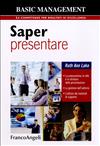
Saper presentare
La preparazione, lo stile e la struttura della presentazione. La gestione dell'uditorio. L'utilizzo dei materiali di supporto
Come calibrare correttamente il proprio stile di presentazione all’uditorio che si ha di fronte? Come preparare la sala che ospiterà la presentazione? Come accogliere il pubblico? Una nuova edizione (completamente rivista) di una guida per manager, professionisti, imprenditori, politici, venditori, insegnanti, consulenti che ha sin qui venduto oltre 17.000 copie!
cod. 109.17

Team di vertice
Squadre vincenti per aziende di successo
Un volume che riassume nove anni di ricerche condotte da un gruppo di docenti della Harvard Business School e consulenti del Gruppo Hay (la prestigiosa società di consulenza di direzione). Un libro pratico e una risorsa nuova e vitale per coloro che dirigono aziende, agenzie governative, istituzioni per la formazione o per la sanità e organizzazioni non profit.
cod. 100.700

Fare TFC
Guida pratica per professionisti alla Terapia Focalizzata sulla Compassione
La Terapia Focalizzata sulla Compassione (TFC) ha la finalità principale di aiutare i pazienti a sviluppare compassione e gentilezza verso se stessi e gli altri, a gestire sentimenti di vergogna e di autocritica e a migliorare la regolazione emotiva e la tolleranza della sofferenza. Questo libro spiega le basi della terapia e offre al clinico una guida per mettere in pratica la TFC come modalità terapeutica principale o come approccio da integrare ad altre terapie.
cod. 1161.19

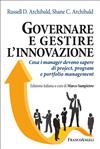
Governare e gestire l'innovazione
Cosa i manager devono sapere di project, program e portfolio management
In un mondo dinamico e che richiede tassi di innovazione sempre più elevati, saper gestire i progetti è divenuta una competenza richiesta anche al top management. Questo libro, snello e con un approccio molto operativo, fornisce ai decisori delle organizzazioni non solo le informazioni utili per comprendere il project management, ma anche le indicazioni operative per garantire il successo dei progetti.
cod. 100.829