SEARCH RESULTS

The search has found 104906 titles

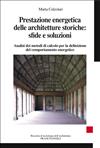
Marta Calzolari

Prestazione energetica delle architetture storiche: sfide e soluzioni.

Analisi dei metodi di calcolo per la definizione del comportamento energetico

L’indagine, tra le prime in questo campo, si concentra sulle criticità dell’applicabilità alle architetture storiche degli strumenti che vengono correntemente usati per l’analisi del comportamento energetico di edifici nuovi o di recente costruzione. Una prospettiva innovativa rispetto al tema della riqualificazione energetica degli edifici storici.

cod. 1330.101

Stefano Liebman

Prestazione di attività produttiva e protezione del contraente debole fra sistema giuridico e suggestioni dell’economia

GIORNALE DI DIRITTO DEL LAVORO E DI RELAZIONI INDUSTRIALI

Fascicolo: 128 / 2010

Lo scritto riproduce una delle relazioni introduttive alle Giornate di studio Aidlass 2010 dedicate alla riflessione sulle "linee di confine" del diritto del lavoro nel sistema giuridico privatistico: in particolare è destinato ad approfondire le somiglianze ed i momenti di contatto che, nell’ambito del sistema giusprivatistico, sono andati sviluppandosi fra la regolazione della fattispecie tipica di riferimento del diritto del lavoro - il contratto di lavoro subordinato - e alcune nuove figure contrattuali in relazione alle quali la disciplina speciale, di ispirazione prevalentemente europea, tende a porre precisi limiti legali all’autonomia contrattuale delle parti a protezione del contraente debole. Esaminate le novità più significative in materia di "contratti di impresa" ed esclusa la possibilità di ricavarne una ratio unitaria, lo scritto si concentra sulla ricostruzione del tradizionale dibattito lavoristico in tema di subordinazione, pervenendo alla conclusione di una permanente attualità del profilo di rilevanza dei "poteri di governo" interni alla relazione contrattuale nella parametrazione della disciplina protettiva.

Il saggio analizza le persone che sono coinvolte nel settore creditizio nella località di Chiu- ro, in Valtellina, nell’ultimo quarto del XIV secolo. Attraverso l’utilizzo della documentazione notarile, l’autore esamina i prestatori, le loro attività, le modalità del loro coinvolgimento nel mercato del credito e come essi si inseriscono nella dinamica piazza chiurese. Il saggio evidenzia l’affermazione del modello economico e sociale rappresentato dall’élite rurale. Il successo delle scelte economiche di questi notabili, anche attraverso gli atti di mutuo e i prestiti dietro ipoteca fondiaria, li rende il punto di riferimento per gli altri ceti sociali che cercano di arricchirsi. I mercanti, gli artigiani, i proprietari immobiliari e i con- tadini benestanti tentano di ripercorrere le medesime strategie economiche dell’élite locale, seppur con modalità differenti, dimostrando la proficuità dei prestiti e la loro utilità anche come mezzo di mobilità e di affermazione sociale.

Il volume analizza l’evoluzione delle strutture produttive agricole attraverso il supporto statistico del microdato aziendale di fonte Istat. In particolare, il testo analizza le dinamiche aziendali nelle loro prospettive strategiche fornendo un supporto informativo dettagliato sia a livello aggregato che per circoscrizione territoriale. I principali risultati sono proiettati nel quadro della futura programmazione dello sviluppo rurale per alcune considerazioni sulla nuova Pac.

cod. 365.909

Michela Cortini, Paula Benevene

Press representation of child work: an exploratory study

RISORSA UOMO

Fascicolo: 1 / 2009

Child work, child labor, social representations, content-analysis, discourseanalysis - The present study aims at investigating the social representation of child work in the press. According to the macro-hypothesis, there should be a stereotyped and negative representation of child work, that does not distinguish between legal and illegal works, between child work and adolescent work and, more generally, does not consider that in same cases work can be a training opportunity. 82 articles on child work, issued in the Italian press between 2003-2005 have been analysed with the software T-Lab, in terms of both content and discourse analysis. The results are only in part consistent with the main hypothesis, showing a problematic and multifaceted representation of child work with also positive elements, especially for what concerns the Catholic press.

Ettore Casadei

Presiede

AGRICOLTURA ISTITUZIONI MERCATI

Fascicolo: 3 / 2006

Alfredo Massart

Presiede

AGRICOLTURA ISTITUZIONI MERCATI

Fascicolo: 3 / 2006

Made Ika Prastyadewi, Indah Susilowati, Deden Dinar Iskandar

Preserving the Existence of Subak in Bali: The Role of Social, Cultural, and Economic Agencies

Economia agro-alimentare

Fascicolo: 3 / 2020

This study focuses on the existence of Subak in Bali as a form of agricultural local wisdom that needs preserving and protecting. This study was conducted in Jatiluwih Subak in Tabanan Regency – Bali as an icon of the World Cultural Heritage. The analysis relied on the mixed-method approach, with 94 farmers as the research respondents. Findings from this study demonstrate that only some farmers understood Subak’s status as the World Cultural Heritage. In addition, most of them did not plan to sell their agricultural lands because those lands were inherited from their ancestors that need preserving and inheriting their offspring. Subak, as a customary institution, plays a dominant roles socially, culturally, and economically in preserving well-functioning Subak. However, the government’s supports are still crucial in preserving Subak to remain as a World Cultural Heritage.

Angela Bellia

Preserving and Managing the Sonic Heritage of the Performative Spaces of the Past

RIVISTA ITALIANA DI ACUSTICA

Fascicolo: 1 / 2023

The ongoing “Sonic Heritage” project aims to develop a new multidisciplinary analytical approach that models the relationship between the intangible aspects and the spatial configuration of performative spaces of the past in order to assess the risks to sonic heritage of particular case studies in Italy, and to contribute to the monitoring of present-day sound and noise for the future management and preservation of historical cultural heritage. Moreover, this project also concerns the risk assessment of sonic heritage in ancient theatrical spaces as well as the modern reuse of these theatrical structures and the relationship with their intangible aspects, environment, and landscape. This paper will present some issues raised by the “Sonic Heritage” project concerning the study of sonic heritage of ancient theatres and how sonic heritage could be preserved and managed in the future.

The public bath called sento in Japan has a long history, and it became popular during the Edo Era. There are many sento in urban areas where the population is concentrated, and there are still 500 public baths in Tokyo. A classic sento, designed like a temple imaging heaven, has an architectural presence in the city. These sento not only have a bathing function, but have always played a role as a local community hub, having many possibilities as a safety net for various social problems such as elderly care and childcare, and for social issues such as local disaster resilience. However, in recent years, sento have drastically decreased, due to the spread of in-home baths, the condition of buildings, inheritance problems and so on. In addition sento occupying large pieces of and are prime targets for real-estate developers. The loss of every sento is lamentable, but of even greater concern is the impact on the neighborhood: empty houses without baths are increasingly abandoned, the shops that regular bath customers visited closed, and people stop walking at the street which were illuminated by the light of bathhouse. The area gradually changes and loses its vitality, as sento had supported the "regional ecosystem". On the other hand, young people and medias have shown increased interest in sento . Indeed, the role of a community hub is being reevaluated at a time when the lack of communication has become a major issue. Recently, there are increasing number of cases in which sento are operated as a modern local salon with various functions such as event spaces, and runner stations. At the same time, more and more public baths are converted into shared offices and galleries. There are cases that citizens use local vacant buildings to voluntarily create a community hub instead of a sento. Also, we are trying to convert sento to cultural assets, in order to maintain and revitalize sento, which is a symbol of the local community, and reorganize the local network. In this paper, I would like to consider the future of past heritage in popular culture through examples of sento. How can we visualize and utilize the local ecosystem that extends from a sento to the entire region? In Tokyo, a city with a high metabolism, I will introduce local cultural heritage that should be handed down to the future, using the historical local base like sento as a case study, and present its current status, various trials, and possibilities.
Fabio Bracci, Giuseppe Cardamone

Presenze.

Migranti e accesso ai servizi socio-sanitari

cod. 1144.24