Libri di Architettura, design, territorio

La ricerca ha estratto dal catalogo 205 titoli

Sommario:

Cities worldwide are grappling with escalating housing costs that burden lowincome citizens and threaten to turn urban centres into exclusive spaces. In Berlin housing commons have emerged as a source of hope for urban citizens and activists concerned with guaranteeing residents’ right to housing and a resident-centred city. This study examines the impact of state governance on the development of CH as a housing commons in Berlin, that is, as a decommodified, non-state form of collaborative housing that pursues the goals of inclusivity and serves the interests of the neighbourhood and city as a whole.

Codice libro:

cod. 11111.17

Sommario:

Planning green infrastructures at the regional scale can be considered an intentional way of spreading the positive impacts of environmental conservation policies. In this volume, a methodological approach is experimentally implemented into the Sardinian region (Italy), in order to identify both a regional green infrastructure, and a network of ecological corridors connecting the regional protected areas.

Codice libro:

cod. 11786.3.1

Autori:

Titolo: Design Dynamics

Navigating the new Complex Landscape of Omnichannel Fashion Retail

Sommario:

The fashion industry is entering the dynamic global competitive market, promoting various actions prioritising design, creativity, sustainability, and technological advancement as pivotal factors. The book analyses the multifaceted nature of the fashion retail experience through the lens of the design discipline, aiming to contextualise the evolution of retail within increasingly complex processes, networks and interconnections, both theoretically and practically.

Codice libro:

cod. 10319.23

Autori:

Ester Iacono

Titolo: Emotional Design for Children Healthcare

Strategie di intervento progettuale per l'umanizzazione delle cure in ambito pediatrico

Sommario:

Il volume esplora la dimensione emozionale e psico-emotiva dell’esperienza pediatrica nel contesto sanitario, con un focus particolare sul ruolo e sui contributi dell’Emotional Design e dell’approccio Human-Centred Design (HCD). Il lavoro analizza il tema dell’affettività dei bambini nella valutazione e progettazione di esperienze utenti positive, come requisito da considerare all’interno del processo di progettazione dei sistemi ospedalieri.

Codice libro:

cod. 10085.18

Autori:

Laura Greco, Stefania Mornati

Titolo: Esperienze di industrializzazione in Italia

Il progetto-programma per gli edifici postali (1974-1987)

Sommario:

Il panorama offerto dai piccoli edifici postali, costruiti a cavallo degli anni Settanta e Ottanta del Novecento, è l’esito di un’imponente iniziativa edilizia a gestione pubblica e di un ampio e complesso lavoro di ricerca coordinato dall’architetto Pierluigi Spadolini. Questo contributo si pone nell’ottica di una valorizzazione di questi manufatti in quanto icone del passaggio, da un’edilizia dai caratteri essenzialmente tradizionali alle rare sperimentazioni aperte a forme di industrializzazione delle procedure costruttive estese anche alle piccole realtà periferiche del Paese.

Codice libro:

cod. 10445.1.1

Autori:

Silvia Maria Gramegna

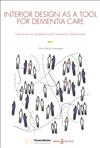
Titolo: Interior design as a tool for dementia care

Experiences and guidelines for the Therapeutic Habitat Model

Sommario:

This book investigates the role of interior design in the enhancement of the effectiveness of Non-Pharmacological therapies for Alzheimer’s disease care.  The author presents the conceptual model for an environmental system called “Therapeutic Habitat”, meant as a system of environmental interventions, based on tangible and intangible aspects, products and furniture, objects and services. Its aim is to enhance the well-being of people with dementia and stimulate recognition and interaction with the surrounding environment.

Codice libro:

cod. 10319.8

Autori:

Filipe Gonzalez

Titolo: RIPAM 9 - Cultural Migrations

Conference Proceedings

Sommario:

The RIPAM, an acronym for “Rencontres Internationales sur le Patrimoine Architectural Méditerranéen”, has evolved into an informal organization of professors, researchers, and professionals who, since the first edition, have come together to form a group that has organized and continues to organize meetings in various Mediterranean countries.

Codice libro:

cod. 11810.2.10

Autori:

Serena Giorgi

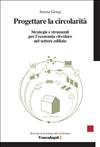
Titolo: Progettare la circolarità

Strategie e strumenti per l'economia circolare nel settore edilizio

Sommario:

Le politiche ambientali europee stanno promuovendo una transizione dall’attuale economia lineare verso un’economia circolare, che mira a ridurre i rifiuti e l’estrazione di materie prime. Per realizzare questa transizione, il settore edilizio risulta prioritario, in quanto a livello europeo, è responsabile di circa il 50% dell’estrazione totale di materie prime e del 37,5% della produzione totale di rifiuti. Il libro restituisce i fondamenti dell’economia circolare: 1) gestione delle risorse materiche e dei rifiuti; 2) progettazione per la reversibilità; 3) organizzazione di modelli gestionali di circolarità e relazioni tra gli operatori della filiera.

Codice libro:

cod. 11330.6

Autori:

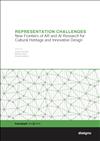
Titolo: Representation Challenges

New Frontieres of AR and AI Research for Cultural Heritage and Innovative Design

Sommario:

Augmented Reality (AR) and Artificial Intelligence (AI) are technological domains that closely interact with space at architectural and urban scale in the broader ambits of cultural heritage and innovative design.
This essays, by reintroducing the combination of Augmented Reality (AR) and Artificial Intelligence (AI), explores its new frontiers. The ambitious goal of this second step was to explore the new boundaries that AR and AI mark in the fields of cultural heritage and innovative design, opening to international studies.

Codice libro:

cod. 10342.5

Autori:

Titolo: Representation Challenges

Augmented Reality and Artificial Intelligence in Cultural Heritage and Innovative Design Domain

Sommario:

Augmented Reality (AR) and Artificial Intelligence (AI) are technological domains that closely interact with space at architectural and urban scale in the broader ambits of cultural heritage and innovative design. The growing interest is perceivable in many fields of knowledge, supported by the rapid development and advancement of theory and application, software and devices. This book collects 66 papers and identify eight lines of research that may guide future developments.

Codice libro:

cod. 10342.2